

New eBook: Fit with Diabetes from DiabetesStrong.com author Christel Oerum
If you haven’t read Christel Oerum’s blog, DiabetesStrong.com , then it’s time to add it to your subscription feed. Christel has been an inspiration to me for a long time. Living with diabetes since 1997, she blogs about health and fitness while managing diabetes. One look at the photos on her blog and her fit physique and you may assume that Christel’s advice must be geared towards body builders and endurance athletes, but that could not be further from the truth. Christel’s blog, videos, coaching, and now, her e-book, all make diabetes fitness and nutrition accessible to all of us, regardless of our weight or physical fitness. As a busy mom, I’ve used Christel’s video workouts to squeeze in a routine in my basement during my toddler’s naps, and her recipe for cooking the perfect chicken breast has become a weekly meal for our family.
Hop over to Christel’s blog here, or download her eBook here to get started. Christel, thank you for showing us that fitness and nutrition with diabetes doesn’t have to be complicated!

They said so. So it must be true.
 Is it just me, or has there been a recent uptick in the “we can totally cure your diabetes with this natural remedy” lately? I swear in the last few weeks I’ve had someone tell me that:
- Type 1 diabetes isn’t an autoimmune disease
- Type 1 can be reversed by eating a paleo diet
- Type 1 diabetes is the result of my mother not eating a vegan diet while pregnant with me
- Type 1 diabetes, Alzheimers, and MS are all reversible and we’re not told about it due to a large government conspiracy involving the meat and dairy industry
Oh hi there DOC.
Well hey there, DOC. How have you been? It’s not that I haven’t been here. I have. I’ve been on Twitter, reading other diabetes blogs, and working at my full-time day job in the diabetes world. But I haven’t been here on this blog. Why? Well, as you can see by scrolling down a few lines, I had a baby. And because that’s something I wanted for a very long time, I chose to take a break from all distractions (well, except that one thing called work…which APPARENTLY you have to go to if you want to pay the mortgage) to focus on learning to be a mom. And what a time it has been!
All the clichés are true: I love him more than I thought was humanly possible. My love for him makes me want to explode sometimes because I feel like it is more than I can fit in my heart. I don’t like to be away from him, but I know he is having a blast at daycare with all his little friends when my husband and I are at work. Every minute of the past 18 months has been an exercise in humility, strength, love, adventure, and unbelievable happiness. How did I get so lucky? I wonder this every time I hear his goofy little giggles, when he runs to my arms at the end of daycare, and when I lift him out of the crib during a bad dream at night. Its like my heart is now contained in this 30-pound little person and I see it running around my kitchen, pulling the dog’s tail every day. It is my favorite thing ever.
Diabetes is still here. Learning how to juggle T1 with a baby was a balancing act. The lows that came constantly through the night when he was nursing as an infant were exhausting. Now he’s old enough to imitate my CGM beep when he hears it, which I have mixed feelings about. I allowed myself a year of more relaxed control when he was born – I should have at least the amount of time I spent prepping for being pregnant + the pregnancy to be more lax! Now in the past six months, I’ve focused back in on diabetes and tightened things up again in a manageable way. It’s been one of those things that was an evolution, not an ah-ha moment. I keep bibs and binkys AND glucose tablets everywhere now, even in the diaper bag because I learned quickly how much we take having two free hands for granted. One great thing about having a child is that I feel like having diabetes has become less of my personal identity than ever before, and I mean that in a good way.
So now, 18 months later, I’m thinking about diabetes a little more, and feeling like it might be time to come back to this space. A lot has changed in diabetes since I last blogged! The AP projects, mobile CGM platforms, and more choices than ever with how to manage your diabetes. I’ll be interested to see what 2017 offers all of us in the diabetes world. So hi again DOC. Nice to see you.
Life right now.
They say having a child changes everything. You never really know what that means until you are in it and going through it. I have to say, it’s the single-handed most wonderful, most rewarding, most amazing, most awe-inspiring and most difficult thing I have ever done. I am madly in love with my little guy and also truly understanding what “having it all” looks like on a day-to-day basis. I’m back at work full-time, and the second I walk in the door after work, I am a full-time mom.
This leaves little time for much else. So far, I’m squeezing in a few runs a week - mostly in the wee pre-dawn hours when even the dog gives me the “are you serious?” look. After little one is asleep at night, it’s time for my husband and I to catch up while we cook dinner. Then off to an early bedtime since I know someone will be waking me up around 1 or 2 for his next meal.
I am honored to have this be my life right now. I am honored to be a mom and to have the opportunity to work full time. And I am also conscious of exactly how much I am capable of packing into one 24-hour period. After six years of blogging, sometimes five days a week, I’m not in a place where this fits anymore - at least not with any regular frequency.
I am still very much part of the DOC, but those capacities and involvements have evolved as my life has evolved. I may come back to more blogging as my little one’s needs change, or I may decide to keep posts occasional for the time being. I’m not sure. Just like everything in life, time will tell and I trust that things will play out the way they are supposed to.
For the time being though, I am needed in roles outside of being a blogger, and I’m going to answer that call with my full attention. I am still here, but taking a more passive, quiet role in the DOC. Perhaps it’s meant to be that right now, I’m in listen-only mode. There are times when observing, learning, and processing are more important than being the loudest voice in the room. Perhaps this is one of those times. I will continue to listen to the universe for where I am called to next, and pledge to evolve with those needs. We will see what adventures await!
Keep in touch my friends 🙂
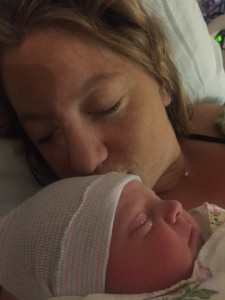
He’s Here!
Well, we wanted a surprise and we sure got one - two weeks early! Baby Hauptman decided to arrive on August 24th at 6:16pm - two weeks ahead of his scheduled due date. Since then, we’ve been home enjoying every minute of time with him. Even though we had asked to be surprised by the gender, several ultrasound technicians had used the pronoun “she” throughout the pregnancy, so you can imagine our surprise when my husband Jacob exclaimed “it’s a boy!” Every day brings a new round of firsts for us as we learn about him and learn what it means to be parents at the same time. Truly, it’s like no other joy in the world. We fell in love the second we saw his face and have been smitten ever since.
I’ll be taking a break from blogging for the next few months to focus on my son and being a parent, and to be fully present and aware during this special time in our lives. See you in a few months! And thank you, so very much, for all of your support along the way. The DOC has helped me get him here safe and sound.
That 10th month they forgot to mention….
 I’m 37 weeks pregnant. For those of you who don’t count in weeks (I sure as heck didn’t until I became pregnant), that’s 9 months and 1 week pregnant. Yes, pregnancy is actually 10 months long (add that to the list of fun facts they don’t mention before you decide to have kids). Things are going ok. In the grand scheme of things actually, I should consider them spectacular because our baby is healthy and really, that’s all the matters.
Mama on the other hand, oy. I’ve had a whole host of health issues pop up in the 11th hour here, none of which are life-threatening but are conditions to monitor nonetheless. I don’t like getting that kind of news but I’m keeping my eye on the prize which at this point, is only 1-2 weeks away (depending on what the doctors decide).
Interestingly enough, my diabetes control is at the bottom of the list of worries right now. About two or three weeks ago, I started getting some lows during the night. They became more and more consistent, and around the same time, I found that my carb ratio was too aggressive for my breakfast and lunch as well. Basically, everything started needing less insulin.
This came as a total surprise because every book/blog/endocrinologist has said my insulin needs will continue to ramp up throughout my pregnancy to the very end, and then sharply drop off right after delivery. I examined my food choices and exercise, and although I know I tightened the reigns after my uptick in A1c at the last endo visit, I was barely bumping over 120 most days. Plus, my fastings were under 70mg/dL (which at that point shouldn’t be called “fastings” but instead “low bg alarm clocks that will wake you up when you desperately need that last half hour of sleep”).
It was my high-risk OB (also known as a Maternal-Fetal Medicine or MFM doctor) who finally had some insight. She asked me at my last visit if my blood sugars had been easier to control recently. I wondered in that moment if, she had powers of mind reading as well as an MD, since the topic had been on my brain. I confirmed they had indeed been a little too easy to manage – the lows were back. She told me at this stage in pregnancy, the placenta is fully grown and no longer demanding such a high metabolic need on my system. She also mentioned most of her patients with diabetes saw this relaxation in insulin needs towards the end of the line.
I emailed my endo a download of my CGM, and we started coming down on the overnight basals gradually, which is helping, but I’ll need a reduction in everything overall I think as I’m still riding too low. I guess the one perk is that my final A1c before baby should come back in the heart of the fives! But, not sure it’s worth the amount of glucose tablets I’ve been rolling through. Regardless, I find it interesting that no one/no blog/no book mentioned this little downturn – truly it came out of the blue for me.
Diabetes: Adjust, test, adjust again. Rinse, repeat. Forever.
The numbers don’t lie…right?
 “You’re gonna be so bored by this CGM download” I chirped to my endo. “Things are so dialed in right now you can barely tell I have diabetes!”
This was the tone as I was wrapping up my most recent endo appointment. Finally, in month nine of my pregnancy, I’m feeling pretty solid on my basal rates, carb ratios, and correction factors. I rarely go outside the lines of my CGM these days, and have been waking up to fastings below 100mg/dL. My endo and I reviewed my CGM download, and she sent me off smiling to the laboratory for an A1c, which I was sure would come back in the fives.
In fact, I had predicted an A1c of 5.7%. How can I be that exact on my guess? Well, I’ve gotten pretty good at using my CGM download as an A1c predictor. If I do a 90 day download of my CGM and look at the average BG, I can use an online A1c calculator to see where I stand. I’ve been doing this for the past two years or so, and it’s never steered me wrong (give or take a .1 or .2% deviation). Literally, for two years running, I’ve predicted my A1c - usually on the nose. I like doing this because it prevents me from being blindsided by an unexpected number. My most recent 90 day download showed an average BG of 119mg/dL which should have yielded an A1c of 5.7%.
Given that this strategy has yet to produce an incorrect prediction, one can imagine my surprise the next morning when I opened an email containing my lab results and saw…6.3%. What. The. Heck?! That wasn’t just a little off..that’s over half a percentage point. Normally, I’d be stoked about that kind of number, but as I’ve blogged before my goal during this pregnancy has been to keep my A1c under 6%, per the instructions of my doctors and my own goal of lowering my risk as much as possible.
I was pissed. And confused. And convinced that those labs simply had to be wrong. The lab report itself contained its own estimated average blood sugar, which for an A1c of 6.3% is 134mg/dL. Right there, things were not adding up. My CGM is taking 288 readings every single day - nothing can provide a more accurate average than that thing. And if my download showed 119%, where on earth was this coming from? I emailed my doctor and let her know that although I’m not one to argue with the numbers, I just felt like this one made no sense, and I gave her my reasoning. She wrote back shortly suggesting we get it drawn again, and add in testing my fructosamine. I’d never heard of or taken that test, but she noted it can be a good way to verify A1c.
I went back to the lab the next day (good thing I’m at the doctor 100 times a week anyways) and got it pulled again. The next morning: 6.2%. Still making no sense! The fructosamine was a little more revealing, although I had to do some serious Googling, consulting with my personal physician assistant (that would be Jacob), and a bit of math, but essentially, the fructosamine looks back a few weeks - not months - like A1c does. That test also showed that I should have an A1c in the fives, at least for the last month or so. That gave me some peace of mind and proved that at least for the last month, I haven’t been imagining how good things have been.
At the end of the day, I’m not sure what happened. There were about 2 weeks in June where I had some major challenges controlling my BGs - lots of travel and some vacation time with food/exercise challenges. But overall, the numbers simply aren’t correlating. And more than just being upset that my A1 is up, what bothers me the most is knowing just how damn hard I’ve been working, and still seeing a number go up. Truly I have never been more dedicated to my diabetes management than right now. It’s a slap in the face to see that number and I’m still baffled by the result.
Have any of you ever had an A1c (or another lab test) that simply didn’t add up? Did you argue the point, or let it ride? And I’m curious if anyone has ever had their fructosamine measured concomitantly to verify the A1c. This was a new test for me. Let me know what your experiences have been!
Evolutions.
 I haven’t been blogging much lately and it’s not just because I’m so busy setting up cribs/washing tiny clothes/sterilizing bottles these days. With a mere five weeks or less to go until baby (eek!), I’ve got a lot on my mind too. I’m fully focused on my health and blood sugars right now, trying to make sure that our baby’s growth has every chance of staying on the right track, and that my BGs don’t creep up during this last phase of pregnancy as I tire out both physically and mentally from all the focus. I also switched jobs within my company - from being on the road in sales all the time to being at a desk just five miles from home. I can’t even begin to say how healthy this change has been for me (and baby too). I’m no longer spending nights out in faraway cities for work and I’m spending minimal time behind the wheel communiting the short distance to my new gig. But even though the job is with my same company, just in a different division, it’s still new, and that has demanded a hefty chunk of my few remaining brain cells these days. Needless to say, my priority list is a short one right now. And I’m ok with that.
I’ve hit a groove with my diabetes management this last week or so. My basal rates are dialed in perfectly for what I need right now, and my carb ratio and correction factors seem to also be doing the trick. My exercise has changed from my beloved boot camp and boxing classes to long walks in the morning before work (on the days of the week I can drag myself out of bed that early) or on the weekend with the dog. A1c is still in the fives, which will always feel nothing short of miraculous to me. Suffice it to say there isn’t much exciting commentary from me these days in the realm of diabetes management or otherwise - and I’m ok with that.
I’ve always blogged because I had things I wanted to share and discuss with other folks with diabetes. When I started this blog, it was to become part of the robust conversation that exists in the diabetes online community, and I’ve been so lucky to be part of that conversation since 2009! But as I find myself moving to a different phase in my life, making room for a whole other person to join my world, I find myself having less room for other things. I expected that and I am embracing that right now.
I’m not ready to leave the blogging world just yet, but it is evolving right now into something that I do less frequently. And I have a feeling that right when this new littler person gets here, I’ll be taking a long hiatus from the DOC while I get used to what that new normal looks like. For right now though, things are holding steady as I get ready for the biggest change of my life. And although that’s doesn’t make for particularly good blog entries, it actually feels pretty darn satisying to me. If there’s one thing I’ve learned from the DOC in all these years it is that living well with diabetes is all about checking in, testing, adjusting as needed, and continuing to adapt. Lessons that will serve me well as a parent too, I am sure.
Quotable Quotes of the weekend.
 Fourth of July weekend meant BBQs, hanging with friends, and watching some super-illegal commercial-grade fireworks being exploded at the local park. All around good times celebrating America’s birthday. It also meant being over 7 months pregnant and out in public in the heat. With all the food present at the festivities, there was plenty of discussion about diabetes and food choices as well. Here are my top snippets of the long weekend: the Good, the Bad, and the…REALLY?
“Are you allowed to have more that one child with diabetes? Like can you have as many as you want?”
“Can I touch your belly?” Yes. Touches belly. “Ew. Why is it hard?”
“Wow your belly has really popped out now! MUCH more than last time I saw you!”
“You must be dying in this heat. I mean it must just be awful, in your condition.”
“Wow congrats! Are you ready for your life to be over?”
“Do your shorts come up over your belly? Oh they do. So that’s how maternity shorts work.”
“There’s plenty of dessert! And Lexie there’s a ton of fruit for you - no sugar!”
“I’m sorry mam you can’t park there just to load up your vehic….oh no problem. You can totally park there.”
“Mam let me get someone to help you with these (one small bag) of groceries.”
“So have you ever seen Steel Magnolias?”
“My son has diabetes. Can he have kids one day too?”
“Wait no seriously what exactly, literally, did you eat to get your A1c that low? Wait lemme grab a pen.”
“You SHOULD have a c-section if they’ll let you - makes for a much prettier baby! No smushed faces.”
“You should have planned to be pregnant in the winter!”
“Can I get you a beer? Glass of wine? We have great gin and tonics too!”
My personal favorite though? “This will be the best thing you’ve ever done.” I’m going to let that comment stick with me, and try to just let the rest go :).
What’s Workin’.
 There was time when anything over 30 total daily units on my pump meant I’d had a serious carb-heavy day. Like I must have had a bowl of ice cream, or a pasta dinner to warrant something in the upper 30s or GASP: 40 units! In one day! (Keep in mind everyone’s total daily units vary and this is not a commentary on the “right” amount of insulin, simply what I am used to).
Those days, honey, are long gone. The past few weeks, I’m a regular in the high 50s. Sometimes I have a 60 unit plus day and I don’t bat an eye. I will crank that pump up until steam comes off. But as I hit the home stretch here of the last 10 (-ish? We might deliver early!) weeks it’s amazing to see how things done changed with my management. If I thought I had vigilance before, I’ve taken hawk-like monitoring to a whole new level. Our baby is measuring a bit big, despite me having a normal person’s A1c. And although this can simply be chalked up to the fact that both my husband and I were on the larger side as babies, I’m still trying to keep my blood sugars from having anything to do with it. Which means running through 60 units of insulin a day, occluding a few more pump sites than normal, and aggressively checking CalorieKing.com to make SURE I’ve got that carb ratio right. In the spirit of “I can do this damnit,” I thought I’d share a few practical tips, besides investing in Humalog stock, that are working for me during the last trimester of this pregnancy:
1.) Eating dinner no later than 7:30. This was a BIG change for Jacob and I. He and I work late and tend to eat late. Cooking together is our bonding time so we wait until emails are done and everything is buttoned up before we head to the kitchen to cook, catch up on the day, and dine. It was normal for us to eat dinner at 8:30 or 9pm. But since I struggled with overnight BGs, my doctor suggested eating earlier to 1.) have more time to fix a problem before bed and 2.) actually get to the problem (i.e. latent digestion issue, post-prandial spikes) sooner. It’s been hard for us but we’re consistently eating by 7:30 or earlier and it’s made a huge difference. It’s meant leaving emails to the next day and not always feeling “settled,” but it’s working. By the time I hop into bed (um….more like lumber and fall these days actually), I’m usually recovered from any issues and going into the overnight with steady numbers.
2.) Using my bolus calculator at times when I”m at higher risk for stacking boluses. For me, the mornings are when I stack boluses aggressively. I would get annoyed if my number started to drift up, feeling like it would ruin my day. Then I’d pile to much insulin on top of itself and end up low by lunch. Making sure I stop to actually plug in my BG and carb count prevents me from overdoing it too much, and that’s exactly what bolus calculators are for.
3.) Slashing carbs even more than before. Summer time is the best time for all my favorite fruits. I look forward each year to peaches and nectarines and watermelon. And those things aren’t totally off the list, but I’ve reduced all carbs in general, including fruit. I make sure to get plenty of nutrition for me and baby with tons of veggies, proteins, and dairy, but when I’m already taking this much insulin and still being resistant, I can help myself by downsizing the carbs. And don’t worry, I’ll make up for it after the baby is here!
4.) Walking every morning. I stopped running at 22 weeks (about halfway through the pregnancy) but exercise is key to keeping my BGs low and preventing me from using up an entire bottle of Humalog a day. It’s meant getting up much earlier on work days, and sometimes it takes a colossal effort to get my sneakers on and a leash on the dog but I have to move my butt every single day, no matter what. A brisk walk after a meal has also helped my insulin work harder and prevent post-prandial spikes.
5.) Doing my best to ignore the scale. This is a pretty hard one. I have gained weight! Already more than the recommended amount for pregnancy but I’m doing my best to not give a crap (easier said than done). Per my doctor, it’s more important that I keep my BGs as good as they are right now than worry about the weight that’s piling on due to taking so much more insulin than I’m used to. I don’t love this new body type on myself but guess what? It’s not about me anymore. And that’s totally worth it to me!