

CHO with my coffee? Or nah?
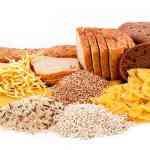 I’ve long struggled with my dinner-time bolusing due to the fact that 1.) Jacob and I tend to eat dinner pretty late (8pm is the regular), and 2.) we eat pretty low carb (good in the short term, but can be challenging as higher-fat, higher-protein foods digest hours later). When my endo and I discussed this for the 10th time at my last visit, she said perhaps I should pay a visit to the nutritionist on staff, just to get some fresh ideas and perspective. I gave that a big ‘ole “why not” and booked the appointment.
I had not been to see a nutritionist since I was 18 years old, when a woman who appeared to be in her mid to late 90s peered down her nose at me through her bifocals and told me I was not, under any circumstances, to ever drink any alcohol except for “one light beer with dinner.” Which of course led to me drinking only light beer throughout college in amounts far greater than “one with dinner.” This led to wide swings in my BGs as I let them go up with the carb-heavy beer so I didn’t drop too greatly when they caused a low hours later. If only someone had leveled me at that age about alcohol, carbs, how it affects your body and how to drink safely and smartly with T1, I would have saved myself from four years of weekends that consisted of 250s and 60s. So I had not really had a great experience with a nutritionist before, but in this new chapter of child-bearing I find myself in, I am open to new ideas. So I went.
The nutritionist was friendly and open. We reviewed the food log I had prepared and discussed challenges with my BG. Then I got overly defensive when I saw her reach for a book titled “Gestational Diabetes” and I started down the “I am NOT a gestational diabetic I have had Type 1 for twenty-” before she stopped me and said “Oh I know! I’m just pulling some fun menu ideas from this book, that’s all.” Chill. Out. Lex.
Most of our discussion was helpful, and it gave me a few new recipe/menu ideas. But there was one area I had trouble wrapping my brain around. She really wanted me to increase the number of carbs I was eating. In particular, at breakfast. When I asked her why, she first said it was important to ensure that both the baby and I get adequate nutritional value, which personally, I call total BS on. I eat a ton of veggies and proteins, as well as dairy and some fruit. I am sure we are getting the right nutrition, and isn’t my healthy baby and 5.5.% A1c evidence enough that what I am doing is working? (I kept that to myself, by the way).
But then she offered another reason for me needing more CHO at breakfast, and this is where I’m looking for ya’ll’s opinion. She said that not eating any or enough carbs at breakfast can cause my live to over-release glycogen stores throughout the day, leading to higher blood sugars. That, my friends, was news to me and if true, a compelling reason to add more carbs in the AM. But I’ve also never heard of this, and never had it recommended to me before.
Have any of you heard any truth to this? Here’s my skepticism: glucose release from the liver is one way we get energy - the other way being through the food we eat. In normal folks, once the body starts producing insulin, another hormone, amylin, is sent to the liver to say “Hey SHUT IT DOWN, WE HAVE ENOUGH SUGAR.” In T1 folks, we don’t make the hormone amylin, since it also came from our dead beta cells. So if I eat more carb in the morning, and take my usual artificial insulin bolus, that STILL won’t send any signals to the liver telling it to stop sending glucose, correct? My understanding is that signal is only sent when one produces their own insulin.
Thoughts? Feelings? Permission to have half an English muffin with my eggs tomorrow morning?
Did you enjoy this post? Why not leave a comment below and continue the conversation, or subscribe to my feed and get articles like this delivered automatically to your feed reader.
Comments

The WordPress human tester won’t let me post-though the above is true.
My impression of the glucogenic process is that it’s screwed up by our inability to perfectly balance the amount of insulin with our body’s need. The liver is supposed to store glucose in the presence of insulin.
That being said, it sounds like you’re going to get another blog post out of this. Besides your endo, this question sounds perfect for Gary Scheiner.
I like carbs.

Opinion I can do 
I am a fan of carbs, but that might be due to sports. I shall freely admit that my poor attempts at low-carb “diets” have never lasted more than one week, before I said “buggerit” and returned to proper breakfast.
My explanation would more likely be that a low carb diet would generally lead to more gluconeogenesis from protein to supply brain with sugars (other than no-carb and ketones, I suppose). In which case I’d also expect higher amounts of fat used for energy and thus higher blood ketones and more insulin resistance.
Or in other words: If I skip my breakfast, I need more basal during the late morning.
However - where the cutoff (or minimum CHO content) is, I’d have no idea. More carbs are clearly always good, though - you can calculate them, they don’t act overly long and as long as the time delay between pump and food is right everything will be easy.
Like floating on rainbows.
Especially during pregnancy, or so I am told
My experience is totally anecdotal and not very scientific, but as soon as I read this I thought: “THAT explains why whenever I try to eat a super low-carb breakfast I end up bitterly disappointed that my blood sugar isn’t awesome!” My dream breakfast is an 80-carbohydrate pile of banana pancakes, which I rarely to never indulge in. However, when I try to eat on the opposite end of that scale (eggs and turkey sausage, plain tea) I’m always disappointed that my blood sugar still climbs. For me, the best results are in the middle - around 20g carb at breakfast results in steady numbers. So as far as I’m concerned - have that English muffin! It now seems like science might be on your side.

My perinatologist (who specializes in Type 1 Diabetes during pregnancy) was always trying to get me to eat LESS carbs with breakfast…and I was only eating 15g. I initially would eat eggs and 1 piece of toast and on busy mornings I would just eat peanut butter toast. It would take whopping doses of insulin to keep my post prandial from going above 130 (his goal for me). I couldn’t cut out carbs completely but he kept telling me that even though I am Type 1, there is an incredible amount of insulin resistance (due to hormones) that is worst in the morning. I tried to listen to him, but I just couldn’t get less than 15g of carbs with breakfast so we made it work. Experiment for yourself and I wouldn’t spend too much time trying to figure out WHY things happen…because we all know diabetes is a disease of curveballs!
Well, As an admitted English Muffin connoseur at breakfast, I can tell you that my research, and the advice of my Endo tend to support you. As a T1 (and fellow Bruin!), I have struggled with Dawn Phenomenon, and a liver that loves to release whenever it feels like it. I have also tried the low carb diet as a ay to manage weight thanks to Lantus. However, once I started on Lantus twice a day (11am and 10pm) at my Dr’s recommendation; my Dawn Phenom and early morning release from the liver balanced out enough where the morning carb intake with breakfast didn’t spike my numbers.
Now, my comment is biased because I, too, am a Dietitian. However, having some carbs in the morning will definitely help with decreased liver gluconeogenesis during the day. Yes, we lack amylin - HOWEVER, Lantus injections in T2DM also help decrease gluconeogenesis, just by having a higher amount of insulin in the blood stream.
With that logic, I would completely agree that having a little more carb in the morning would be a good idea. Clearly, having a high fiber, less processed carb is going to be easier on your blood sugar. But some carb *will* help suppress liver gluconeogenesis